You’ve probably heard the buzz around heat pumps — from neighbors upgrading their HVAC to government incentives flooding the news. But here’s the honest question most homeowners quietly ask themselves: how does a heat pump actually work, and is all the hype actually justified?
The short answer is yes — but only when you understand what you’re buying and why. This guide walks you through everything: the science, the components, the real-world benefits, the honest disadvantages, and even what these units look like sitting outside your home. No fluff, no jargon overload — just everything you need to make a confident, informed decision.
What Is a Heat Pump?
A heat pump is a single HVAC system that handles both heating and cooling for your home, year-round. It works by moving heat rather than creating it, which is far more energy-efficient than boilers and furnaces that burn fuel to generate heat.
Here’s the key insight that trips most people up: a heat pump doesn’t manufacture warmth. It relocates it. And that one distinction is the reason it’s so much more efficient than everything that came before it.
Think of it this way. Your refrigerator doesn’t create cold air — it pulls heat out of the compartment and expels it behind the unit. A heat pump works on the same physical principle, just on a much larger scale and in both directions. Like your refrigerator, heat pumps use electricity to transfer heat from a cool space to a warm space — making the cool space cooler and the warm space warmer.
How Does a Heat Pump Work? The Science Behind It
The Core Concept: Moving Heat, Not Making It
Heat pumps transfer existing heat energy from one location to another using the refrigeration cycle. This fundamental difference allows them to achieve 300–500% efficiency (a COP of 3.0–5.0), making them far more energy-efficient than electric resistance heating.
That efficiency number sounds impossible at first. How can something be 400% efficient? Because it’s not converting energy into heat — it’s moving heat that already exists. Physics is doing the heavy lifting.
In Heating Mode — Winter Operation
When the temperature drops outside, your heat pump doesn’t panic. There’s still thermal energy in cold air — even at 0°F, the air contains usable heat. Here’s the step-by-step of what happens:
- Step 1: The expansion valve in the outdoor coil lowers the refrigerant pressure, making it even colder than the surrounding air.
- Step 2: The super-cold refrigerant absorbs thermal energy from the outdoor air — even when temperatures are below freezing.
- Step 3: The outdoor unit’s compressor pressurizes the refrigerant, raising its temperature (often above 130°F).
- Step 4: The hot gas refrigerant is pumped inside, where it moves through the indoor coil and releases heat into your home.
- Step 5: As the refrigerant releases heat, it cools down, returns to a liquid state, and gets pumped back outside.
The cycle then repeats continuously until your home reaches the set temperature.
In Cooling Mode — Summer Operation
During the summer months, a heat pump operates similarly to a central air conditioner. As cold refrigerant passes through the indoor evaporator coil, it extracts warm air from inside the home and turns it into a low-pressure, cool gas. This heat is then expelled outside as the refrigerant flows to the outdoor unit, where it releases the absorbed heat through the condenser coil, effectively cooling the home.
The magic component that makes this seasonal switchover possible is the reversing valve — a uniquely heat pump feature that simply changes the direction the refrigerant flows. One component. Two completely different climate functions.
Key Components of a Heat Pump System
Understanding what’s inside the system helps you maintain it better, spot early warning signs, and have more informed conversations with your HVAC contractor.
Outdoor Unit (Condenser/Evaporator)
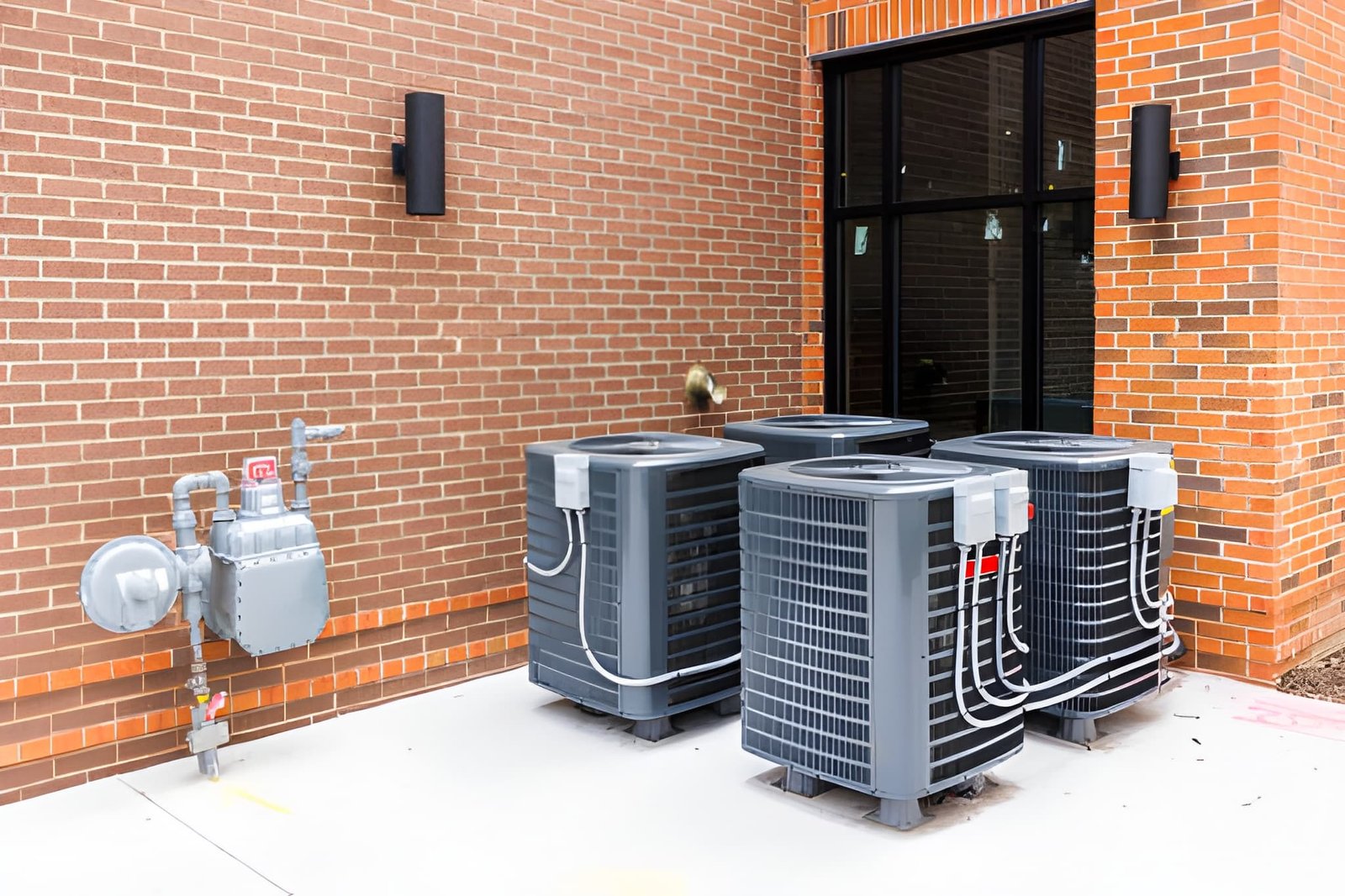
This contains a compressor and a coil for extracting heat from or releasing heat to the outdoor air. Typically located at the side of homes, a heat pump condenser is a box-style unit that resembles a central air conditioner.
Indoor Unit (Air Handler)
Houses the evaporator coil and a fan to distribute the conditioned air throughout your home via your existing duct system — or, in ductless systems, directly into the room.
The Compressor
The workhorse of the system. It pressurizes the refrigerant, which raises its temperature and enables the transfer of thermal energy. Variable-speed compressors in modern units are significantly quieter and more efficient than older single-stage models.
The Reversing Valve
Unique to heat pump systems, the reversing valve changes the direction of refrigerant flow between the indoor and outdoor units, allowing the system to switch between heating and cooling modes as needed.
Refrigerant Lines
Copper tubing running between the indoor and outdoor units that carries the refrigerant throughout the cycle.
The Expansion Valve (TXV)
Controls the flow of refrigerant into the evaporator coil, regulating pressure and temperature in the system.
Types of Heat Pumps Explained
Not all heat pumps are created equal. The right type for your home depends on your climate, property, and existing infrastructure.
Air-Source Heat Pumps
The most common type of heat pump, which transfers heat between your house and the outside air. Today’s heat pump can reduce your electricity use for heating by up to 75% compared to electric resistance heating, such as furnaces and baseboard heaters.
These come in two configurations:
Ducted (Central) — Connects to existing ductwork. Best for homes that already have a central forced-air system. Feels and operates much like a traditional central HVAC, but with dramatically better efficiency.
Ductless Mini-Split — Consists of an outdoor unit and one or more indoor units (called air handlers or “heads”), connected via a narrow line set run through an exterior wall. Since there is no ductwork, ductless heat pumps can be installed almost anywhere in a home — ideal for homes without central ducts or for adding heating and cooling to additions and bonus rooms.
Ground-Source (Geothermal) Heat Pumps
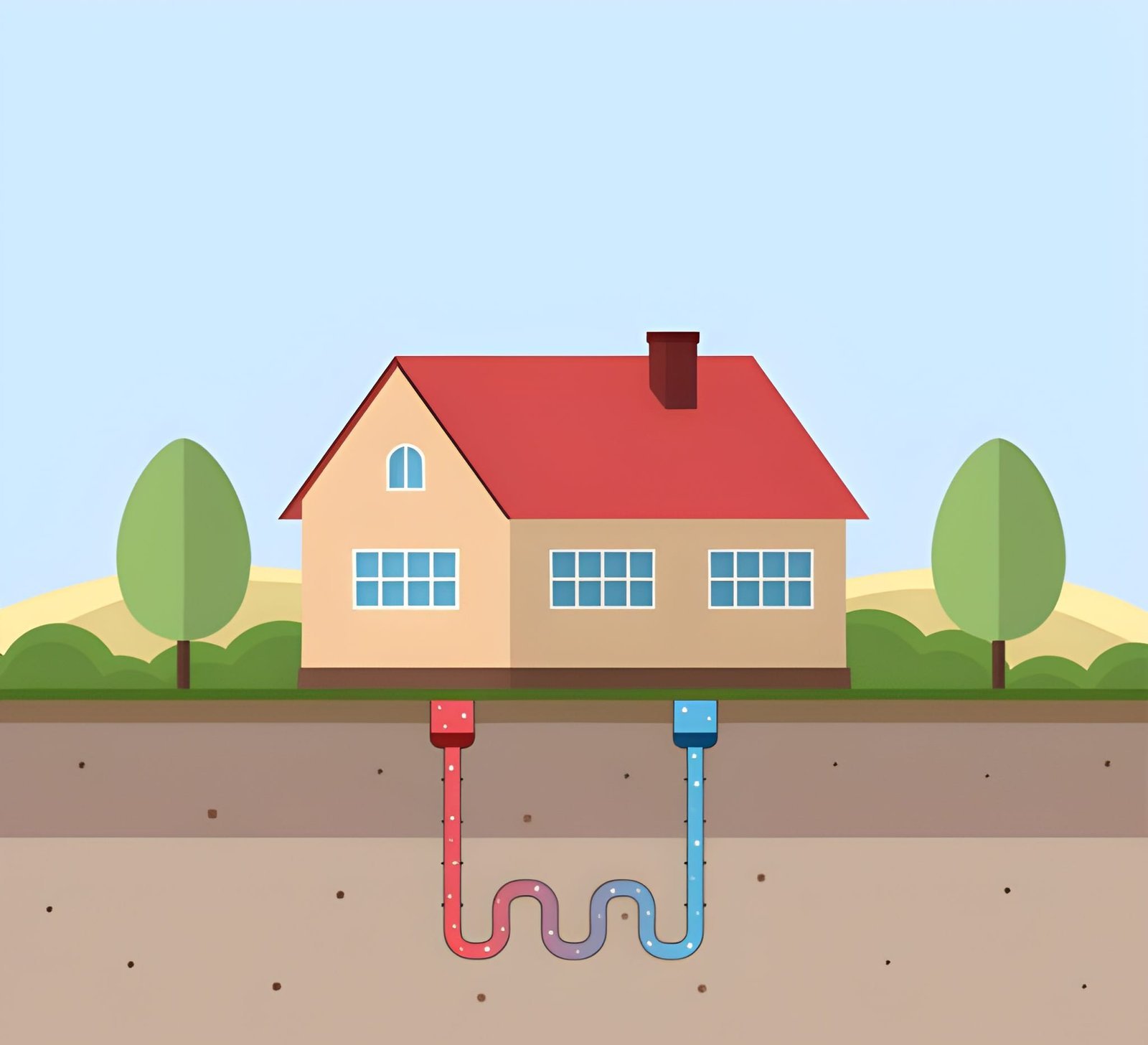
Ground-source (Geothermal) heat pumps use the earth’s consistent temperature to heat and cool a home. In heating mode, they extract heat from deep in the ground and bring it indoors for space heating. In cooling mode, they absorb heat from inside and release it into the ground. More expensive to install, but among the most efficient systems available.
Water-Source Heat Pumps
These use submerged pipes to absorb heat energy from a body of water, like a pond or lake, and bring it into a building for space heating — the least common type because they are expensive to install and very location-dependent.
Absorption Heat Pumps
Also called gas-fired heat pumps, these use heat or thermal energy as their energy source — an emerging option for properties where expanding electrical capacity isn’t practical.
How Does a Heat Pump Work in Cold Weather?
This is the question that creates the most hesitation — and the most misinformation. Let’s address it directly.
Traditional air-source heat pumps do experience efficiency reductions as outdoor temperatures fall. One of the perceived drawbacks of traditional air-source heat pumps is that they don’t operate as effectively once the temperature dips below about 40°F, requiring a backup heating source such as electric resistance heating or a gas furnace on those really chilly days.
But here’s what competitors often skip: cold-climate heat pump technology has advanced dramatically. Modern cold-climate heat pumps can extract usable heat from outdoor air even at temperatures as low as -31°F (-35°C). Even at 0°F, outdoor air still contains about 85% of the heat energy present at 70°F — dispelling the common myth that heat pumps don’t work in cold weather.
Dual Fuel Systems are another smart solution. Dual fuel HVAC systems combine an electric heat pump with a gas furnace, which is typically the best option for comfort and price for those who live in climates that see temperatures drop to freezing during the winter. The heat pump handles the load in mild and moderate conditions; the gas furnace kicks in only during the most extreme cold snaps.
What Does a Heat Pump Look Like?
This question comes up more than you’d expect — primarily because heat pumps are frequently mistaken for standard air conditioners.
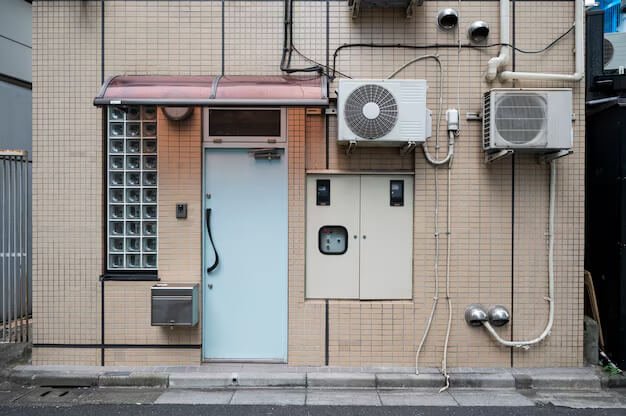
Heat pumps look just like an air conditioner on the outside. Air-source heat pumps are a metal box outside your home with a fan inside the unit. The only physical difference is that a heat pump has a reversing valve — but that part isn’t visible unless you open the unit. Because they look so similar, many homeowners think they have an air conditioner when they actually have a heat pump.
Here’s a quick way to tell them apart practically:
- Check your thermostat — if it has a “Heat” setting that doesn’t reference a separate furnace, you likely have a heat pump
- Look for a model number on the outdoor unit and search it online — manufacturers clearly label heat pump models
- Ask your HVAC contractor during your next service visit — they can confirm in 30 seconds
Indoor air handler units are typically rectangular, wall-mounted or ceiling-mounted (in mini-split configurations), or installed in a utility closet (ducted systems). They’re compact, quiet, and often mistaken for standard fan units.
What Are the Disadvantages of a Heat Pump?
Honest content respects your intelligence. So here are the real limitations — not to discourage you, but to help you evaluate if a heat pump is actually right for your specific situation.
1. Higher Upfront Installation Cost
Heat pumps typically cost more to purchase and install because you’re investing in a dual-function system. On average, homeowners pay a little over $5,500 to install a heat pump. Mini-split systems are the cheapest type, ranging from $2,000 to $14,500, while geothermal heat pumps can reach $39,000.
That said, federal tax credits under the Inflation Reduction Act currently cover 30% of installation costs through 2032 — significantly changing the financial calculus.
2. Reduced Efficiency in Extreme Cold
The heat extraction process becomes less effective as outdoor temperatures drop, leading to decreased heating capacity — a critical disadvantage especially in regions experiencing harsh winters. In extreme cases, backup electric resistance heating may activate, which operates less efficiently than the heat pump itself.
3. Reliance on Electricity
Heat pumps rely entirely on electricity to operate. In areas with high electricity costs or unreliable power supply, this can be a disadvantage. Additionally, during power outages, a heat pump won’t function unless you have a backup power source such as a generator.
4. Noise from Outdoor Units
Outdoors at least, the outdoor unit generates noise — it’s the same kind of sound as the external unit in an air conditioning system. Modern units have improved considerably, but it’s worth discussing placement with your installer if you have close neighbors or a bedroom facing the yard.
5. Installation Complexity in Older Homes
Older buildings often present challenges for heat pump installation due to outdated infrastructure, limited space, or incompatible systems. Retrofitting can be costly and technically demanding. A proper site assessment before committing to installation is non-negotiable.
6. Space Requirements
The outdoor unit needs adequate clearance and airflow to operate properly. Homes with very limited exterior space — particularly urban row homes or tight lots — may face placement challenges.
7. Year-Round Wear
Because a heat pump operates for both heating and cooling across all four seasons, it accumulates more annual run-hours than a system that only heats or only cools. Heat pumps run year-round for both heating and cooling, which means more wear and tear — though this is offset by their typically robust build quality and 20+ year lifespan with proper maintenance.
Heat Pump Benefits That Make the Disadvantages Worth Weighing
To give you a complete picture, here’s why millions of homeowners are actively making the switch:
Energy Efficiency — Heat pump systems can heat with 250–350% efficiency. That’s not a typo. It’s easier to move heat than to produce it, so they’re able to provide 2.5–3.5 units of heat output for each 1 unit spent operating the system.
One System, All Seasons — A single investment replaces both your furnace and your air conditioner. One maintenance contract, one warranty, one point of service.
Lower Carbon Footprint — High-efficiency heat pumps also dehumidify better than standard central air conditioners, resulting in less energy usage and more cooling comfort in summer months. When paired with solar panels, a heat pump system approaches near-zero carbon operation.
Longevity — Indoor units typically last 20–25 years. Ground loop systems in geothermal configurations have functional lifespans exceeding 50 years.
Improved Indoor Air Quality — Unlike combustion-based systems, there’s no burning of fuel, no carbon monoxide risk, and no dry, scorched air blasted through your home. The air delivered is more consistent and better humidity-balanced.
Heat Pump vs. Traditional HVAC: Which Is Right for You?
| Factor | Heat Pump | Gas Furnace + Central AC |
|---|---|---|
| Heating Efficiency | 300–500% COP | 80–98% AFUE |
| Cooling Function | Yes (built-in) | Requires separate AC |
| Upfront Cost | Higher | Lower |
| Operating Cost | Lower | Moderate to high |
| Best Climate | Moderate to cold | Any |
| Carbon Emissions | Very low | Moderate to high |
| Lifespan | 20–25 years | 15–20 years |
| Fuel Source | Electricity only | Gas + Electricity |
The honest verdict: if you’re in a mild to moderately cold climate, plan to stay in your home for 7+ years, and have access to reliable electricity, a heat pump will almost certainly outperform a traditional system economically and environmentally over its lifetime.
If you’re in a region with extreme winters and very low natural gas prices, a dual-fuel system (heat pump + gas furnace backup) often represents the smartest hybrid approach.
Heat Pump Maintenance: Keeping It Running Right
A well-maintained heat pump runs reliably for decades. Here’s what that looks like in practice:
Every Month
- Check and clean or replace air filters (critical for airflow efficiency)
Every Season
- Clear debris, leaves, and obstructions from around the outdoor unit
- Check that the condensate drain line isn’t blocked
Annually (Professional Service)
- Refrigerant level check and leak inspection
- Coil cleaning (indoor and outdoor)
- Electrical connection inspection
- Thermostat calibration
- Lubrication of moving parts
Homeowners should prioritize regular maintenance by scheduling a tune-up twice a year, ideally before the cooling and heating seasons — maintenance helps ensure ideal performance, prevents potential breakdowns, and maintains indoor comfort through the year.
Summary
A heat pump isn’t just an HVAC upgrade — it’s a fundamentally different approach to home climate management. Instead of burning something to create heat, it intelligently and efficiently moves existing thermal energy.
The technology is mature. The financial incentives are significant. The environmental case is compelling. And the comfort, when a system is properly sized and installed, is exceptional.
Whether you’re replacing an aging furnace, building new construction, or simply tired of unpredictable energy bills, a conversation with a qualified HVAC professional and a proper Manual J load calculation for your home is the logical first step.
The heat has always been there. A heat pump gives you a smarter, cleaner way to use it.
FAQs: What People Are Searching Most
Q: Does a heat pump work as well as a furnace?
In moderate climates, absolutely — and with significantly lower energy consumption. In extreme cold (below 25°F), a cold-climate heat pump or dual-fuel system is recommended for consistent performance.
Q: How long does a heat pump last?
With routine maintenance, indoor units typically last 15–25 years. Outdoor units average 15–20 years. Ground-source loop systems can exceed 50 years.
Q: Can a heat pump heat a whole house?
Yes — when properly sized for your home’s square footage, insulation quality, and local climate, a heat pump can serve as the sole heating and cooling system for an entire residence.
Q: Is a heat pump worth it in 2025?
With the 30% federal tax credit currently in effect, rising natural gas prices, and advancing cold-weather technology, 2025 is one of the strongest financial arguments for heat pump adoption in the system’s history.
Q: What temperature is too cold for a heat pump?
Standard air-source heat pumps begin losing efficiency below 40°F and may struggle below 25–30°F. Modern cold-climate models maintain effective operation down to -13°F or lower.